The Homeowner's Guide to Snapped Torsion Springs: Crucial Safety Warning
Garage Door Experts Editorial
Written & Researched
Expert Reviewed DASMA
Verified Mechanical Standards
Key Takeaways
- → Safety First: Snapped torsion springs hold dangerous tension. Never attempt DIY adjustment.
- → Proper Balance: Testing door balance manually prevents premature opener gear burnout.
- → Regular Maintenance: Bi-annual track cleaning and hardware tuning ensure quiet, safe operation.
If you are inside your home and suddenly hear a loud, gunshot-like bang echoing from your garage, there is a very high probability that one of your garage door torsion springs has just snapped.
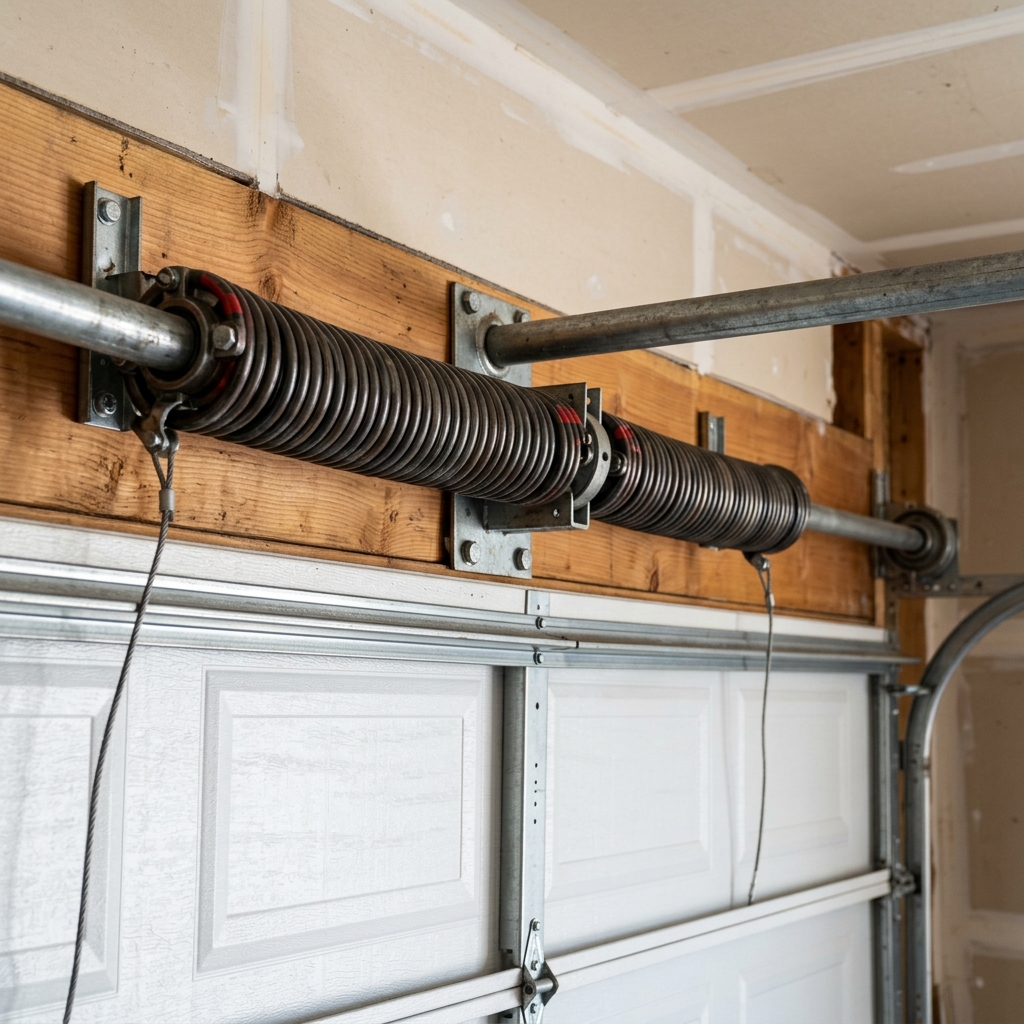
Torsion springs are the heavy steel coils mounted on a metal shaft directly above your garage door opening. Contrary to what many homeowners believe, it is not the electric opener motor that lifts the heavy garage door—it is the torsion springs. The spring winds up tightly when the door closes, storing a massive amount of mechanical force. When you open the door, that stored energy is released, balancing the weight of the door so that it can be lifted effortlessly.
Because these springs hold hundreds of pounds of rotational tension, when they break, they release all that energy in a fraction of a second. This is what creates that loud popping noise, and it is also why broken springs pose a direct physical danger.
1. Why Do Garage Door Springs Break?
Garage door springs do not last forever. They are designed with a specific "cycle life," which measures how many times the door can open and close before the steel fatigues and breaks.
- Builder-grade springs are typically rated for 10,000 cycles, which translates to about 5 to 7 years of normal daily household use.
- High-cycle springs are engineered for 25,000 to 50,000 cycles, providing quiet, reliable performance for 15 to 20 years.
Other factors like rust (which increases friction between the coils), extreme temperature drops (which make the steel brittle), and poor door balance can speed up fatigue, causing the spring to snap prematurely.
2. Critical Safety Warning: Why You Should Never DIY
Torsion spring replacement is one of the most hazardous home maintenance tasks. To install a new spring, it must be wound using solid steel winding bars.
- Rotational Force: A single slip of a winding bar can spin the winding cone with enough force to shatter fingers, break wrists, or cause severe facial trauma.
- Falling Doors: If you release the safety tension with the door in the open position, the heavy garage door can instantly crash down like a guillotine, damaging anything or anyone beneath it.
- Improper Balancing: Selecting the wrong wire thickness or length will leave your door completely unbalanced. This puts extreme stress on your electric opener, stripping its plastic gears and burning out the motor within a few weeks.
3. Immediate Action Steps If Your Spring Breaks
If you have discovered a clean gap in the coils of your torsion spring, follow these safety protocols immediately:
- Do Not Touch the Opener Button: Operating the opener with a broken spring will quickly burn out the motor or snap the lift cables.
- Do Not Pull the Red Release Cord: If you pull the red emergency release cord while the door is open, the door will slide down instantly without the spring to slow it.
- Leave the Repairs to Vetted Professionals: A certified local technician carries specialized safety gauges to measure your door weight, select the exact matching high-cycle spring, and safely wind it using professional winding rods.
To protect your property from mechanical hazards, contact our local dispatch hotline for high-conversion Spring Replacement or Garage Door Repair help today.