Selecting the Ideal Smart Garage Door Opener: Horsepower and Drive Types
Garage Door Experts Editorial
Written & Researched
Expert Reviewed DASMA
Verified Mechanical Standards
Key Takeaways
- → Safety First: Snapped torsion springs hold dangerous tension. Never attempt DIY adjustment.
- → Proper Balance: Testing door balance manually prevents premature opener gear burnout.
- → Regular Maintenance: Bi-annual track cleaning and hardware tuning ensure quiet, safe operation.
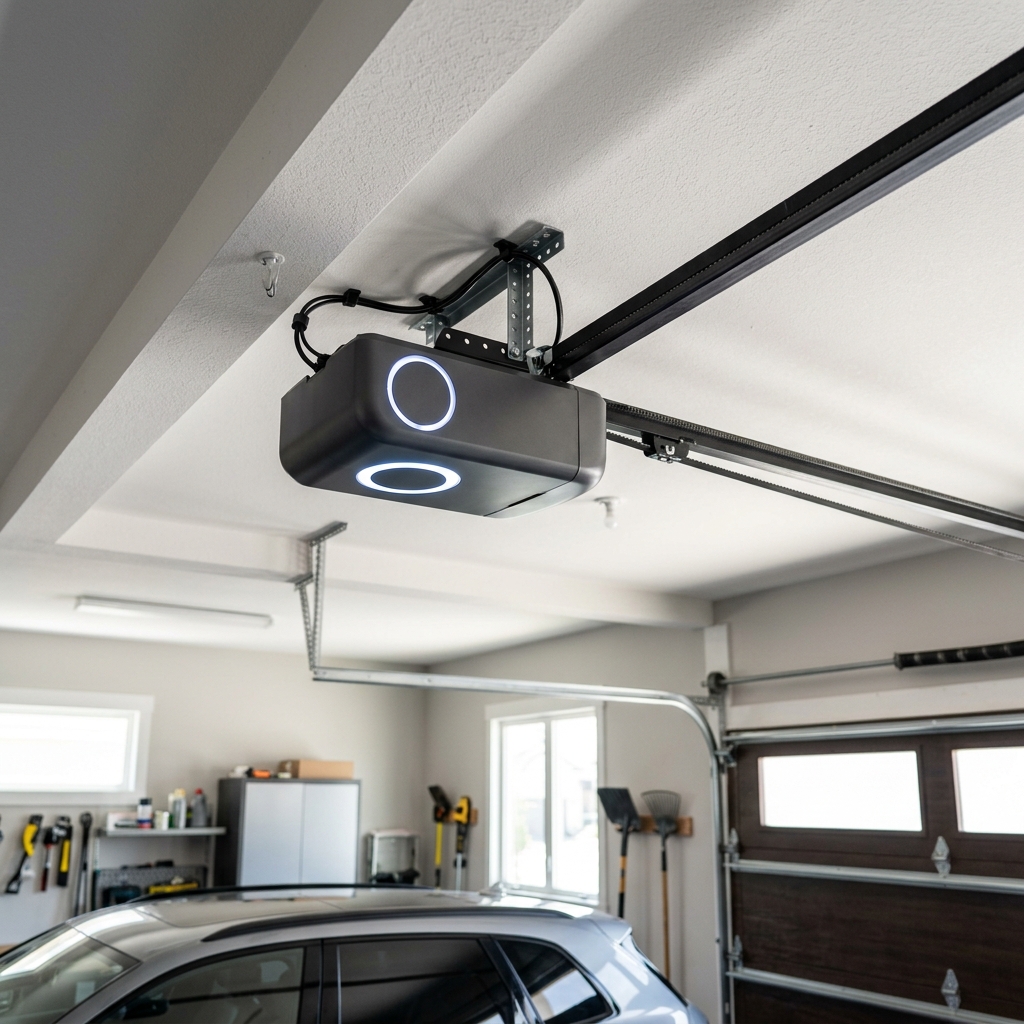
When it is time to replace a failed or outdated garage door opener, many homeowners simply buy the first unit they see. However, selecting the wrong opener can lead to noisy operation, premature wear, and a motor that struggles to lift your heavy door.
Choosing the right opener requires understanding your door's weight, your noise tolerance, and the features you need.
1. Selecting the Right Motor Horsepower
Openers are rated by horsepower (HP). Choosing the correct power level ensures the motor can lift the door without straining.
- 1/2 Horsepower: The standard power level for single-car or lightweight, uninsulated double-car sectional doors.
- 3/4 Horsepower: Ideal for heavy double-car wood doors, carriage doors, or heavily insulated steel doors.
- 1 Horsepower (or DC Equivalent): Recommended for oversized commercial or massive custom-built wood doors.
2. Choosing the Drive Mechanism
The drive mechanism determines how the motor connects to the door and has a major impact on operating volume and cost.
- Chain Drive: The most common and economical option. It uses a metal chain to pull the trolley. While highly durable, chain drives are metallic and noisy, making them a poor choice if you have a bedroom directly above the garage.
- Belt Drive: Uses a steel-reinforced rubber belt instead of a chain. Belt drives are virtually silent and operate smoothly, making them the gold standard for attached garages.
- Screw Drive: Uses a threaded steel rod to move the trolley. Screw drives have fewer moving parts, requiring less maintenance, but do not perform well in areas with extreme seasonal temperature fluctuations.
- Wall-Mount (Jackshaft): Mounts directly to the wall on either side of the torsion shaft. Wall-mounts free up valuable ceiling space and are extremely quiet, though they require a torsion bar setup.
3. Evaluating Smart Connectivity and Safety
Modern openers include high-tech security features that protect your home from intruders:
- Wi-Fi & App Alerts: Check if your door is open or closed and control it from anywhere in the world using your smartphone.
- Rolling Code Technology: Every time you press the remote button, a new security code is generated. This prevents thieves from intercepting your signal to break into your garage.
- Battery Backup: A built-in battery allows the opener to operate normally even during a power outage.
To find the perfect motor for your home, contact our local technicians for Opener Repair & Installation or Garage Door Repair help today.