The Ultimate Bi-Annual Garage Door Preventative Maintenance Protocol
Garage Door Experts Editorial
Written & Researched
Expert Reviewed DASMA
Verified Mechanical Standards
Key Takeaways
- → Safety First: Snapped torsion springs hold dangerous tension. Never attempt DIY adjustment.
- → Proper Balance: Testing door balance manually prevents premature opener gear burnout.
- → Regular Maintenance: Bi-annual track cleaning and hardware tuning ensure quiet, safe operation.
As the largest and heaviest moving object in most homes, your garage door is a complex mechanical assembly of springs, cables, pulleys, tracks, and rollers. Because we rely on it multiple times a day to enter and exit our homes, it undergoes a massive amount of physical wear and tear.
Unfortunately, most homeowners ignore their garage door until it suddenly snaps a spring, locks their vehicle inside, or refuses to budge.
By performing a simple, 10-minute preventative maintenance check twice a year, you can spot minor issues before they become expensive emergencies, extend the lifespan of your opener motor, and keep your door operating quietly and safely.
Here is your ultimate garage door maintenance protocol:
1. Perform a Visual Inspection
Stand inside your garage with the door closed and look closely at the mechanical parts:
- The Torsion Spring: Inspect the coils directly above the door for a visible gap, which indicates a snapped spring.
- Cables: Look at the steel lift cables on both sides of the door. Check for any fraying, loose strands, or corrosion. If you spot frayed cables, call a vetted professional immediately—do not attempt to replace them yourself.
- Tracks & Hinges: Look for bent brackets, loose track bolts, or cracked hinges.
2. Tighten Loose Hardware
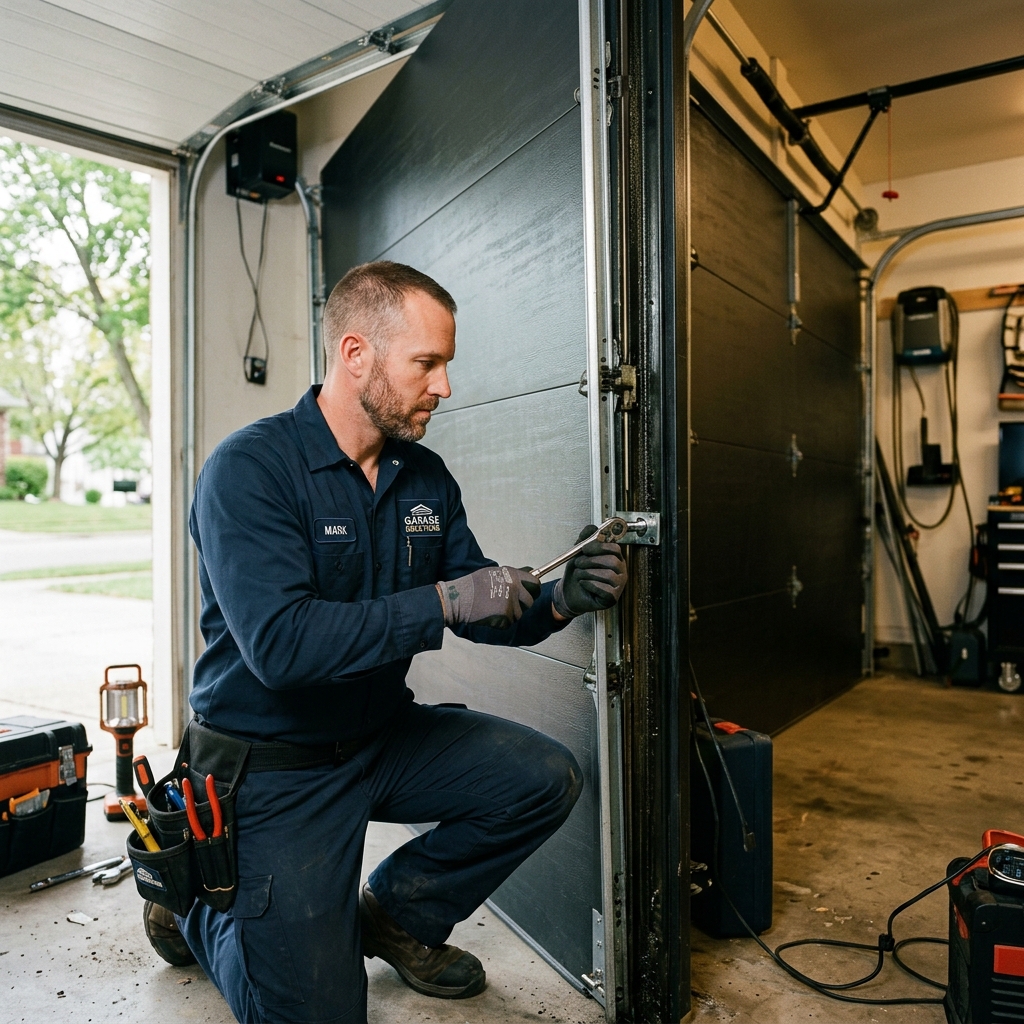
Because your garage door vibrates heavily during each lift cycle, nuts and carriage bolts can loosen over time. Use a standard socket wrench to check and tighten the nuts on all support hinges, roller brackets, and track ceiling supports. Make sure they are snug, but do not overtighten, which can warp the steel or strip the wood threads.
3. Clear and Inspect the Tracks
Tracks should guide the rollers, not obstruct them. Take a clean, damp rag and wipe out the inside of both vertical and curved tracks. Remove any built-up dust, cobwebs, hair, or metal filings.
- Important Warning: Never apply grease or WD-40 inside the tracks. Grease will trap dirt and dust, creating a thick, grinding paste that will freeze your rollers and burn out your opener motor.
4. Lubricate All Moving Parts
Lubrication is the secret to a silent, durable door. Use a specialized silicone or white lithium garage door spray.
- Rollers: Spray a tiny drop directly into the ball bearings at the center of each roller.
- Hinges: Lubricate the pivot points where the hinges bend.
- Springs: Spray a light coat across the entire length of the torsion springs to reduce friction between the coils.
- Bearings: Apply spray to the bearings on both ends of the torsion shaft.
5. Check the Balance of the Door
An unbalanced door forces your electric opener to lift far more weight than it is designed to handle, stripping its internal gears.
- How to Test: With the door closed, pull the emergency red release cord to operate the door manually. Lift the door about halfway up and release it.
- The Result: If the door stays in place (or drifts very slightly), it is perfectly balanced. If it crashes down or shoots upward rapidly, the spring tension is incorrect. Call a vetted technician to safely re-balance the torsion spring.
6. Test the Auto-Reverse Safety Systems
For the protection of children, pets, and vehicles, modern garage door openers are equipped with two critical safety systems that must be tested regularly:
- The Photo-Eye Test: While the door is closing, wave your foot in front of one of the safety sensors located near the floor on both sides of the tracks. The door must reverse instantly.
- The Mechanical Resistance Test: Place a flat 2x4 block of wood on the garage floor directly underneath the door path. Press the button to close the door. The moment the door strikes the wood block, it must reverse and open.
To protect your property from mechanical hazards, contact our local dispatch hotline for high-conversion Garage Door Repair or Spring Replacement help today.